
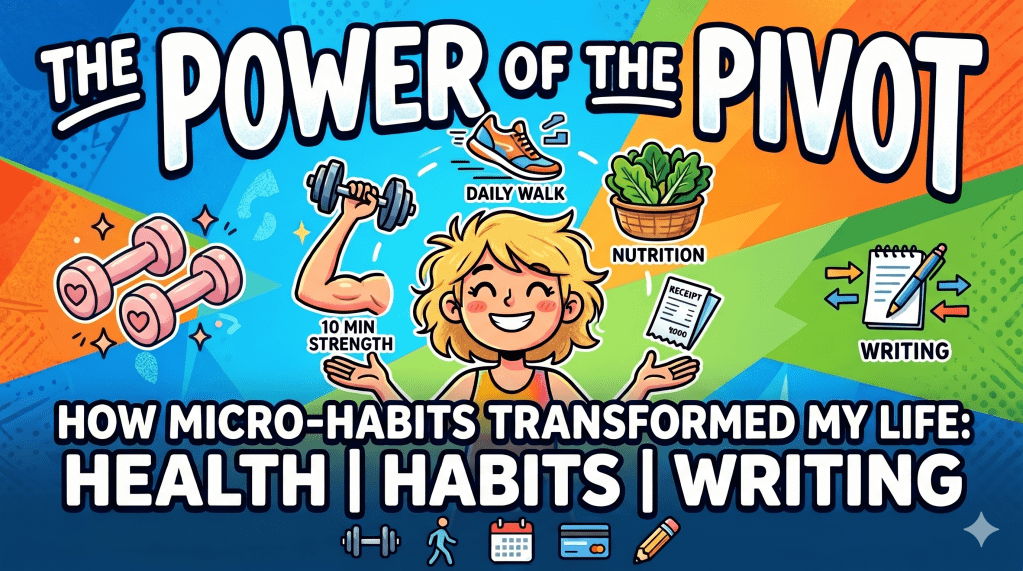
When January rolled around, I set some big goals for myself. But as we all know, enthusiasm is easy; consistency is hard. Life gets busy, energy levels dip, and suddenly that “all-or-nothing” mindset becomes a recipe for doing nothing at all.
That’s when I discovered the magic of micro-habits.
Instead of waiting for the perfect, uninterrupted hour to crush a workout or draft a polished article, I started breaking my goals down into bite-sized, manageable pieces. By applying micro-habits across every area of my life—fitness, nutrition, finances, and creativity—I’ve stopped rushing, started enjoying the process, and finally seen real progress.
Here is how micro-habits actually work in the wild, and how you can apply them to your own routine.
1. Fitness: Fitness Doesn’t Have to Happen All at Once
We often think a workout doesn’t “count” unless we dedicate an entire hour straight to it. But who has time for that every day?
I aim for 10,000 steps a day and use a pedometer to track them, but I rarely get them all in one go. Instead, I stack micro-sessions:
- The Lunch Break Hustle: I grab a quick walk during lunch to get a baseline of steps.
- The Post-Work Split: If I’m short on my goal when I get home, I split the remaining steps in half—doing twenty minutes before dinner and twenty minutes after.
- The 10-Minute Strength Snack: On days a full workout feels impossible, I’ll do 10 to 15 minutes of weights in the morning, then finish the rest after work.
The Takeaway: Movement is cumulative. Ten minutes in the morning and ten minutes at night still equals twenty minutes of strength training you wouldn’t have done otherwise.
2. Nutrition: Simplifying Meal Prep
Eating healthy can feel like a full-time job, but micro-habits can streamline the kitchen. I’ve found that smart shortcuts keep me on track with my nutrition goals without burning me out.
- Embrace the Freezer: I don’t always have time to buy fresh produce, and I hate wasting food. Keeping frozen vegetables on hand means I always have a healthy side ready to go.
- The Weekend Staple: On weekends, I do one small thing: boil a Cornish hen or chicken. This gives me fresh stock for the week and shredded meat for quick, low-effort dishes.
- Backup Bad Days: I keep sardines and frozen breakfast sandwiches stocked. When I’m in a rush, these quick options keep me from pulling into a drive-thru.
3. Finances: The “No-Pile” Receipt Rule
This year, I’ve been tackling a No-Buy Year, focusing intentionally on my spending. The secret to my success isn’t a complex algorithm; it’s a simple evening routine.
I keep a physical ledger handy. Every single evening, I sit down and write out what I spent that day. I never let the receipts pile up. Because I look at my spending daily, it stays top-of-mind. Now, when I look at my ledger, it’s strictly food, household essentials, and gas. The random impulse purchases have practically vanished.
4. Creativity: Writing and Creating in Slow Motion
If you wait for inspiration to strike and a free four-hour window to open up, you’ll never write that blog post or make that video.
I used to rush through my creative projects, but micro-habits changed my workflow. Now, I work over several days:
- Nightly Progress: Evenings are my zone. I’ll sit down and just write a paragraph or a single section, picking up exactly where I left off the night before.
- Layered Editing: Once the blog post is done, I turn it into a video script. I record it, and then I edit in stages—adding text one day, images the next, and extra footage later.
By slowing down and treating creativity as a daily micro-habit, my writing and videos are actually improving. Best of all? I’m finally enjoying the process.
Small Steps, Big Results
The biggest lesson I’ve learned since January is that consistency beats intensity every single time. You don’t need a perfect schedule; you just need to be willing to do one small thing at a time.
Whether it’s a 10-minute walk, writing one paragraph, or logging a single receipt, micro-habits add up to massive changes.
What is one micro-habit you can start today?


